
What Should Businesses Look For In A Modern EPOS System?
What Should Businesses Look For In A Modern EPOS System?
Choosing the right EPOS system can improve efficiency, simplify operations, and help your business grow. Modern EPOS systems do far more than process payments — they help manage inventory, track sales, monitor staff performance, and improve customer experiences.
What If Your EPOS System Could Take Payments Without A Card Machine?
For years, businesses have relied on separate card machines sitting next to tills and EPOS systems. One handled orders, the other handled payments. But that is beginning to change.
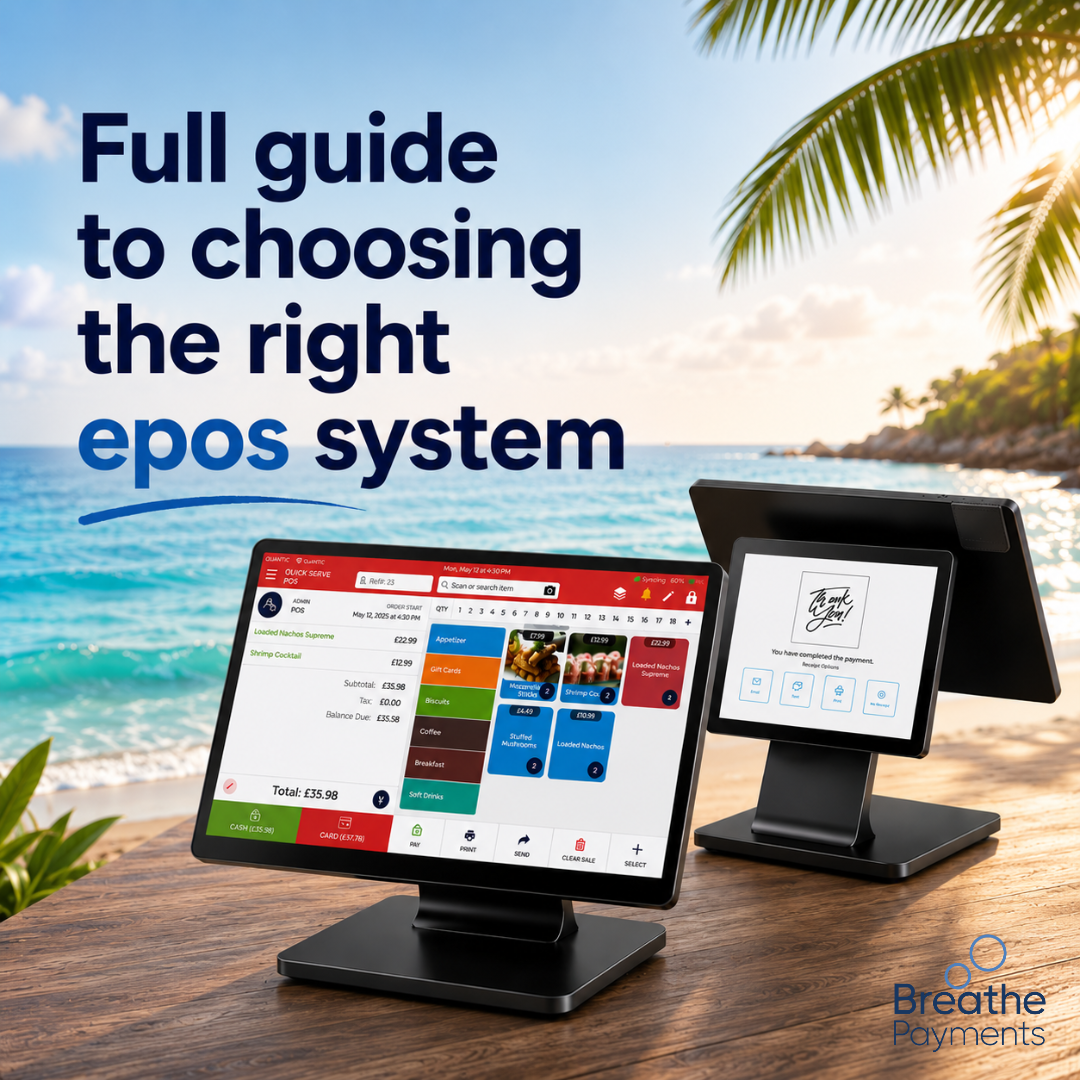
Modern EPOS technology is moving towards integrated payment experiences, where the EPOS screen itself can accept payments without needing a separate standalone card terminal. Instead of switching between devices, businesses can manage ordering, payment acceptance, reporting and operations from one system.
This could reshape how businesses serve customers, reduce hardware requirements and simplify day-to-day operations.
Traditional EPOS systems already help businesses manage sales, reporting and operations, while newer solutions continue to add payment functionality, integrations and real-time insights.
Why Businesses Are Moving Towards Integrated Payments
Removing the need for a separate card machine can bring several advantages:
Reduced cost
Without the need for a card machine, this cost can be removed making the overall cost much cheaper. Especially if you have multiple screens and card machines.
Faster Service
Payments happen directly on the EPOS screen, reducing steps at checkout and speeding up transactions.
Less Hardware & complexity
Instead of multiple devices, businesses may only need one screen for ordering, payment and receipts. Plus less machines to charge at night and less plugs needed.
Improved Customer Experience
A simpler checkout journey can help reduce queues and create smoother interactions. Modern EPOS solutions already help improve checkout speed, reporting and operational efficiency.
Types of EPOS Systems
Traditional EPOS
Usual set up is a large screen connected to a card machine and printer. These can now be linked to the below mobile pos systems to extend to mobile order and pay
Mobile EPOS (MPOS)
Perfect for hospitality, events, market stalls, and businesses needing portable payment solutions. Can be used as a stand alone all in one epos card machine or to extend a traditional epos system above
Choosing the Right Epos System
Before deciding, consider your business size, industry needs, transaction volume, and future growth plans. Retailers, restaurants, cafés, and service businesses often require different features, so selecting the right fit is essential.
Hospitality
Restaurants, cafés, bars and hospitality venues often juggle multiple systems:
- EPOS screens
- Card machines
- Kitchen printers
- Table ordering devices
- QR ordering platforms
Integrated systems & payments will help simplify the whole process with one device that does everything. Or you can use them with a traditional epos system to extend the reach and speed of service
Features to consider for Hospitality Businesses
Order & pay at table – Take orders and payments on one device to cut down on complexity, staff time & customer touch points. Send orders directly to kitchens or bar from tables or outside spaces
Tip management and reporting – Complete visibility on tips by staff member and at a total level is essential for many businesses.
Table Management Systems – Table management is becoming a core EPOS feature for hospitality venues & flexibility is the name of the game with epos systems to cover.
- Table layouts
- Covers and occupancy
- Waitlists
- Service flow
- Staff coordination
Online Table Reservations – Many venues use external reservation platforms, but having it built into your epos system improves reliability, reduces manual tasks and can save money.
Booking widgets can easily be added to Google business listings and websites. And with external booking systems often costing £100’s per month, a built in solution has it’s appeal.
CRM & Customer Management – Modern EPOS systems increasingly include customer management tools to improve service & aid with marketing. Useful things to track are…
- Customer preferences
- Visit history
- Spending patterns
- Repeat visits
- Marketing opportunities
For hospitality and service businesses, customer insight can become just as important as transaction reporting.
QR Code Ordering Built Into The System – QR ordering has become increasingly important for hospitality businesses to reduce costs & speed up service.
Customers can scan a QR code, browse menus, order and pay directly from their phone while orders flow into the EPOS system automatically. Great for larger venues for queue busting & reducing walk outs
Uber Eats & Deliveroo Integration – Not a necessity of all business, but for fast paced take away business this is a useful tool to reduce complexity and view everything in one place.
Many businesses start with separate delivery platform tablets, which is fine up to a point and keeps costs low.
However, once order volumes increase, manually managing multiple tablets becomes more difficult. Integrated delivery platforms can help by:
- Bringing orders into one workflow
- Reducing manual entry
- Lowering order errors
- Improving reporting visibility
- Simplifying kitchen operations
For growing hospitality businesses, integrations often become more valuable as the business scales.
Retail
Retail businesses often need more than just a till and card machine. Modern EPOS systems can help retailers manage stock, improve customer experiences, reduce queues and gain better visibility across the business.
Features To Consider For Retail Businesses
Inventory Management & Stock Control
One of the most important features for retail businesses is real-time inventory management.
Modern EPOS systems can automatically update stock levels as products are sold, helping businesses:
- Reduce manual stock counting
- Monitor best-selling products
- Avoid overselling items
- Improve ordering decisions
- Manage stock across multiple locations
For growing retail businesses, accurate inventory reporting can become essential for improving efficiency and reducing losses.
Integrated Payments & Faster Checkout
Integrated EPOS and payment systems allow businesses to manage transactions from one system rather than relying on separate terminals and software.
This can help with:
- Faster checkout experiences
- Reduced queue times
- Simplified staff training
- Better reporting visibility
- Fewer manual errors between systems
As payment technology evolves, some systems are also beginning to support payments directly through EPOS screens, reducing the need for separate standalone card machines.
Mobile Selling & Queue Busting
Mobile POS devices can help retailers serve customers away from fixed counters.
This can be useful for:
- Queue busting during busy periods
- Assisting customers on the shop floor
- Temporary retail spaces or pop-up shops
- Outdoor or event-based selling
Rather than sending customers to a till point, staff can assist with browsing, payments and receipts directly from portable devices.
Customer Loyalty & CRM Features
Many modern retail EPOS systems now include customer management and loyalty features.
These tools can help retailers track:
- Customer purchase history
- Repeat visits
- Spending patterns
- Loyalty rewards
- Marketing opportunities
For businesses with repeat customers, loyalty features can help encourage return visits and improve customer retention.
Reporting & Business Insights
Retail EPOS systems increasingly provide live reporting tools to help businesses monitor performance in real time.
This can include visibility over:
- Sales performance
- Product trends
- Staff activity
- Peak trading periods
- Cash and card transactions
Access to real-time business insights can help retailers make faster and more informed decisions.
Health & Beauty
Salons, spas and beauty businesses often manage appointments, staff schedules, product sales and customer relationships all at the same time.
Modern EPOS systems can help bring these functions together into one streamlined platform.
Features To Consider For Health & Beauty Businesses
Appointment & Booking Management
Booking management is one of the most important EPOS features for health & beauty businesses.
Integrated booking systems can help businesses manage:
- Appointments and schedules
- Staff availability
- Treatment durations
- Customer reminders
- Online bookings
Having bookings connected directly to the EPOS system can help reduce admin while improving organisation and customer experience.
Customer Profiles & CRM Tools
Many salons and beauty businesses rely heavily on repeat customers, making CRM features increasingly valuable.
Modern systems can help track:
- Customer preferences
- Appointment history
- Product purchases
- Notes on treatments or services
- Marketing opportunities
This can help businesses deliver more personalised service while improving customer retention.
Integrated Payments & Checkout
Integrated payment systems can help businesses manage appointments, retail products and payments from one platform.
This can simplify operations by reducing the need for multiple systems while helping improve reporting accuracy.
Some businesses may also benefit from mobile POS devices, allowing payments to be taken directly at treatment stations or consultation areas rather than only at reception desks.
Retail Product Management
Many salons and beauty businesses also sell retail products alongside treatments and services.
EPOS systems with inventory management tools can help businesses:
- Track product stock levels
- Monitor best-selling items
- Manage supplier ordering
- Reduce manual stock checks
- Improve retail reporting
Combining service and product reporting into one system can provide better visibility across the business.
Staff Management & Reporting
Modern EPOS systems can also help businesses monitor staff performance and operational efficiency.
Useful reporting features can include:
- Appointment performance
- Staff sales tracking
- Commission reporting
- Clocking in / out
- Business performance insights
For growing businesses, access to reporting and customer data can help improve decision-making and day-to-day management.
General Features for all sectors
Loyalty Programmes – Particularly Valuable For Repeat Businesses
Loyalty systems are not essential for every business.
However, they can be particularly valuable for sectors with repeat customers such as:
- Coffee shops
- Cafés
- Health & beauty businesses
- Hospitality venues
- Membership businesses
Loyalty programmes can help improve retention while encouraging repeat purchases.
Accounting integrations
Modern systems can integrate with platforms such as Xero, reducing manual admin tasks.
Transaction data can flow directly into Xero or other accountancy platforms to cut accountant costs and make life easier.
Final Thoughts
The right EPOS system should simplify operations, support business growth, and provide visibility across sales, stock, and customer activity. Investing in the right solution today can help improve efficiency and customer satisfaction long-term.
At Breathe Payments, we help businesses find EPOS and payment solutions designed around how they operate. Whether you need a traditional EPOS setup, a mobile POS solution, or an all-in-one device that combines EPOS software, payments, and receipt printing into a single system, there are options available to suit different business needs.